
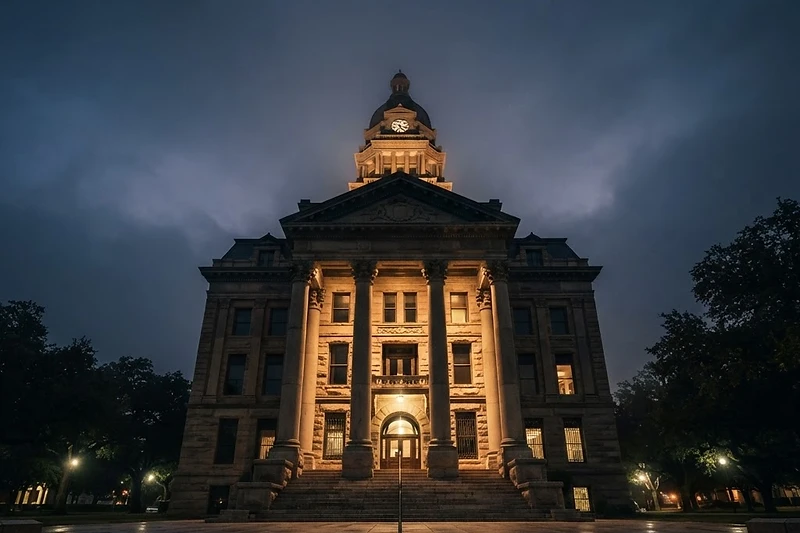
Low Law Firm · Criminal Defense in Abilene, TX
Facing Criminal Charges in Abilene?
Clear, confidential guidance on what happens next, and on the decisions that matter most.
Contact Low Law Firm Today at (325) 455-1889
Criminal Defense in Abilene, Texas
A criminal charge moves quickly. A DWI arrest, a drug possession allegation, an assault complaint, or a theft accusation can go from a traffic stop to a court setting within weeks, and the decisions made in that window — what is said, what is signed, what is preserved — often shape everything that follows. This page explains how criminal cases work in Taylor County and across Texas so that you can understand the process before it moves past you.
In Texas, most cases begin with an arrest or a citation and a magistrate hearing where bond and bond conditions are set. From there, the case moves through a series of court settings that can include arraignment, pre-trial hearings, discovery, motions, plea negotiations, and ultimately a plea or a trial. Class A, B, and C misdemeanors are generally handled in county court, while felony matters proceed in district court, where the range of punishment rises sharply with each degree of felony.
Every case turns on the details. What did the officer observe before the stop? Was the search lawful, and was any statement given voluntarily? How was evidence collected, packaged, and tested, and can it still be reviewed today? Did the State charge the offense the facts actually support? These questions are answered by reading the police reports, the dash and body camera footage, the laboratory records, and the charging documents closely — usually in the first weeks, while witnesses can still be located and memories are still fresh.
The Low Law Firm works with clients on criminal matters the same way it works on injury cases: by reading the file closely, explaining the options plainly, and being direct about what the evidence does and does not show. Whether you are trying to understand a charge that was just filed, a bond condition that was just imposed, or a record you would like to clear, this page is meant to give you the information you need to make your own decisions.
Matters We Handle
Criminal charges we work with
Criminal cases range from a Class C citation to a first-degree felony, and the path through each one is different. These are the matters the firm works with most often.
DWI & Drunk Driving
First-offense DWI, DWI with a child passenger, repeat offenses, and cases that turn on breath or blood testing and the traffic stop itself.
Drug Possession & Delivery
Possession, manufacture, and delivery allegations involving marijuana, controlled substances, and prescription medication.
Assault & Family Violence
Assault and aggravated assault allegations, along with the protective orders that so often accompany them.
Theft, Burglary & Fraud
Theft, shoplifting, burglary of a habitation or vehicle, and fraud allegations where the amount in dispute drives the charge level.
Weapons Charges
Unlawful carrying, prohibited persons, and weapons charges that arise out of traffic stops, searches, or a prior conviction.
Probation & Parole Violations
Motions to revoke, technical violations, and the hearings that decide whether someone remains in the community.
Juvenile Offenses
Cases in juvenile court involving minors, where diversion, records, and long-term consequences matter most.
Expunctions & Nondisclosure
Removing an arrest from a record, or sealing a deferred adjudication, once Texas law makes the case eligible.
Criminal Appeals
Appellate and post-conviction review of criminal matters, including cases tried in Taylor County and across West Texas.
How the Defense Works
Three steps that decide most criminal cases
A criminal case is decided long before a jury is ever seated. What happens in the first weeks, while the evidence is still available, usually determines the options left at the end.
Review Everything First
We read the charging documents, the probable cause affidavit, and the bond conditions in full, then explain what each court date means and what is expected of you before it arrives.
Test the Evidence
Police reports, dash and body camera footage, laboratory results, and witness statements are requested and preserved. Where a stop or a search went beyond what Texas law allows, we raise it by motion and ask the court to suppress what was found.
Resolve or Prepare for Trial
Where the facts support it, we pursue a dismissal, a reduction, or a diversion resolution. Where they do not, we negotiate the terms of a resolution carefully and prepare the case for trial.
Frequently Asked Questions
Straight answers about the criminal process in Texas.
Talk It Through
Questions about a charge or a record?
If you are trying to understand a charge, a court date, a bond condition, or whether an old case can be cleared from your record, the firm can walk through the specifics with you and explain what the process looks like from here.