
Where Do the Animals Go? Abilene's Growth Is Pushing Wildlife Into New Territory
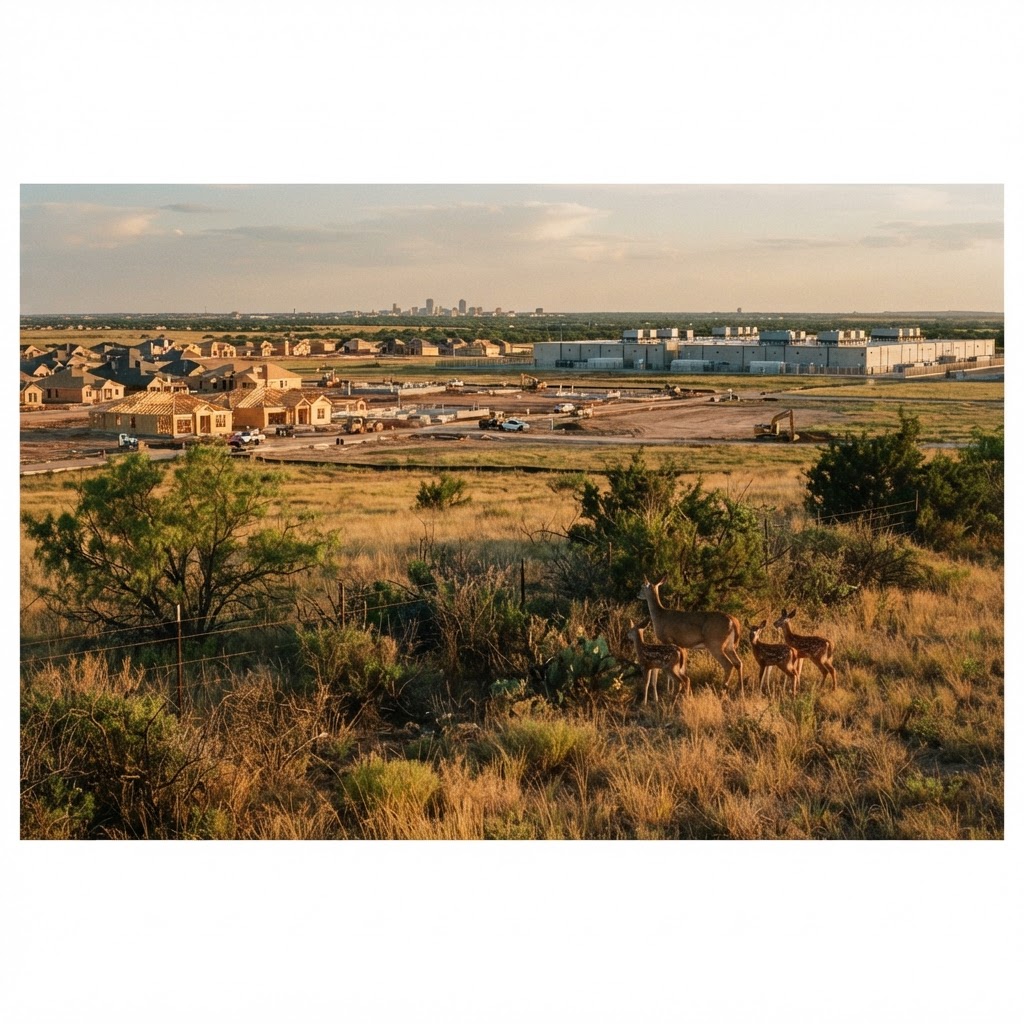
Abilene is changing fast.
New homes are going up. Roads are being worked on. Large data center projects are transforming land that, not long ago, was open space, ranchland, mesquite, and habitat. Most of us see the progress, the crews, the cleared acreage, the new curbs and streetlights, and we think about traffic, schools, or property values.
Fewer of us think about what it means for the animals that lived there first.
When hundreds or thousands of acres are cleared, the wildlife on that land does not simply disappear. It moves. It follows food, water, cover, and the paths it has always used, and those paths now run straight through places where people live, drive, and walk. Understanding where that wildlife goes, and why it matters, is a practical question for anyone who spends time on West Texas roads.
Growth Changes the Map, Not the Instincts
Animals do not read plat maps. A deer that has crossed the same draw behind a ranch house for years will keep crossing it after the ranch house becomes a subdivision. A raccoon or coyote that denned in a mesquite thicket keeps working the same ridge, even when the thicket is now the space between two new fences.
The result is what biologists call edge habitat: the boundary where open land meets development. It is often rich in food, which draws wildlife in, and it also puts animals in constant contact with people, pets, and traffic. Every new development creates miles of this boundary.
Data centers and industrial projects add a different kind of pressure. These are large, fenced footprints, often built on the outskirts of town precisely because that is where land is available. That construction displaces wildlife outward in every direction, pushing deer, hogs, coyotes, and smaller animals toward whatever open ground remains, and frequently toward the roadways that connect everything.
The Species You Are Most Likely to See
A few animals account for most of the encounters West Texans report as the city grows.
Deer
White-tailed deer adapt well to the edges of towns. They browse landscaped yards, travel along creek bottoms and greenbelts, and cross roads at dawn and dusk when visibility is worst. Deer movement peaks in the fall breeding season and again in late spring, and those are the months when collisions rise.
Feral Hogs
Hogs are the heaviest and least predictable animal most drivers will ever meet. They travel in groups, they are low to the ground, and they are often dark enough to be nearly invisible against pavement at night. A hog is large enough to cause serious damage and serious injury.
Coyotes
Coyotes thrive around people. They are most active at night and around dusk, they will take small pets and livestock, and they are not deterred by fences or by neighborhoods. Sightings increase as open land is cleared.
Smaller Animals That Cause Big Problems
Skunks, raccoons, opossums, armadillos, and rabbits follow the same pattern. Armadillos in particular cause a surprising number of single-vehicle crashes because they are low, sudden, and easy to swerve for at the wrong moment.
Why This Matters on the Road
Wildlife and traffic are a dangerous combination, and one that gets worse as a community grows.
A collision with a large animal is not a minor fender bender. A full-grown hog or deer can weigh well over a hundred pounds, and the impact often damages the front of a vehicle, deploys airbags, or sends a smaller car off the roadway. Injuries range from cuts and bruises to broken bones, spinal injuries, and worse.
There is also a second, less discussed risk: the swerve. Many serious crashes involving wildlife do not involve hitting the animal at all. They happen when a driver veers into oncoming traffic or off the shoulder to avoid it. On a two-lane road outside town, that decision can be far more dangerous than the animal itself.
The practical rule most safety experts agree on is straightforward: brake firmly and stay in your lane. Do not swerve. A collision with an animal is usually survivable and usually covered by insurance. A head-on crash with another vehicle may not be.
If you do hit an animal, pull as far off the road as you safely can, turn on your hazard lights, and keep yourself and your passengers out of traffic. Call for help. Do not approach an injured animal, and do not try to move it yourself.
Living With Wildlife as the City Grows
Coexistence is not complicated, but it does require intention.
- Slow down at dawn and dusk. Most collisions happen in the hours when animals move and drivers are tired.
- Scan the shoulders, not just the road. Deer often travel in pairs and groups, so if you see one, expect more.
- Use high beams where it is safe. They reveal eyeshine and body shapes much further out than low beams.
- Secure trash and pet food. It is the single easiest way to keep raccoons, skunks, and coyotes out of your yard.
- Do not feed wildlife. Feeding creates animals that lose their fear of people and concentrate near homes.
- Keep small pets indoors at night. Coyotes treat a backyard as part of their range.
- Report large animals near roadways. A quick call to the city or county can get a hazard addressed before someone is hurt.
Planning matters too. Wildlife corridors, preserved creek bottoms, and thoughtful placement of fencing and lighting along new developments all reduce the number of animals pushed onto highways. Where communities plan for that, collision rates fall.
The Bottom Line
Abilene is not going to stop growing, and the animals are not going to stop moving. The question is whether we adapt quickly enough to the new reality: more wildlife in more places, crossing more roads, at more hours of the day.
Most of the time, that means a memorable sighting and a good story. Occasionally it means a crash. When it does, and when someone is injured, the questions that follow, about what happened, what was avoidable, and who is responsible, matter more than the incident itself.
If you or someone you love was hurt in a collision involving wildlife or any other hazard on a West Texas road, understanding your options early is worth the conversation. The Low Law Firm is here to answer questions, without pressure and without obligation.
Have questions about your case?